How To Install Parallels Desktop 10 For Mac
This page gives instructions on installing Windows on your Mac for the first time to use with Parallels Desktop Lite.
You can also:
Import an existing virtual machine from other Parallels Desktop editions. See KB 123833 for more information.
Moving from PC to a Mac has never been this easy Easily transfer everything on your current PC–operating system, documents, applications, games, even your internet browser favorites –over to your Mac in a snap. Parallels desktop 12 for mac recycle desktop files. Easily convert your existing Windows Boot Camp partition to a new Parallels Desktop virtual machine. The easy to use and intuitive Wizard walks you through the complete setup, including the purchase of a Windows 10 license, if needed. Streamlined Windows Installation Installing Windows on your Mac has never been so simple. Already using Boot Camp?
- Upgrade an existing Windows 7, 8 or 8.1 virtual machine to Windows 10. For instructions, see KB 122884.
Take the following steps to install Windows on your Mac using a Microsoft Windows installation DVD or an .iso disc image file.
If you’re interested, Parallels Desktop 13 for Mac is $79.99 for a new license, but you can try it for free for 14 days or upgrade from version 11 or 12 for just $49.99. Parallels Desktop 13 runs Windows and other operating systems in a virtual machine alongside your Mac apps. It's a good option for those who still rely on certain Windows apps for their business, or gamers who can't live without a favorite Windows game. Parallels Desktop 13.3.2 Crack Key for mac which is specially design for the Mac OS by company Parallels. This is the first software which develops for the Mac users allow them to use Windows on Mac. This is the first software which develops for the Mac users allow them to use Windows on Mac. Download the latest Parallels Desktop 10 build to run Windows 10 on Mac. Right-click on Parallels Icon in Dock > New Choose the option to install Windows 10 Technical Preview. Now, double-click on Install in the Parallels Desktop window. Click Open to confirm that you want to install Parallels Desktop. Next, you need to accept the License Agreement. Next up, enter Administrator Name and Password for your Mac.
Step 1: Purchase Windows
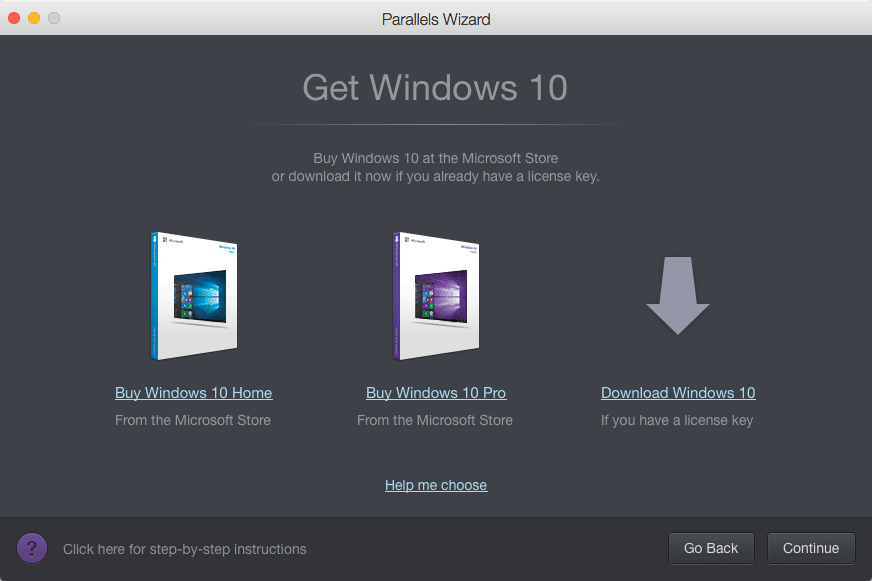
Parallels Desktop Lite does not include Microsoft Windows. If you don’t have a Windows copy, you can purchase Windows 10 from the Microsoft Online Store:
Note:visit this page if you need help to choose Windows 10 edition: Home or Pro.
After the purchase please visit the Download Windows 10 page to create your own installation media and the Windows 10 page to learn more about upgrade from previous Windows versions.
For earlier versions of Windows, please refer to retail stores or authorized online resellers, including Amazon.com.
Step 2: Create a new virtual machine
Start Parallels Desktop Lite and click on File in the application menu, and then select New.
Click Install Windows or another OS from DVD or image file, then click Continue.
Step 3: Select the installation media
You may install Windows from a DVD or an .iso disc image, or a bootable USB drive.
Important: Windows installation files with an .exe extension can be used only to upgrade an existing Windows virtual machine (VM). If you are performing a new install to create a new Windows VM, the .exe installation file will not work. Please contact a retailer to request either a physical disc or an .iso image.
Parallels Wizard will detect the installation media automatically for installing Windows.
You can also switch to manual mode and choose the source for Windows installation.
Step 4: Enter your Windows product key
Click Continue. In the Windows Product Key window, leave Express installation selected.
Note: If you uncheck Express installation, you will need to install Parallels Tools manually after the Windows installation.
When you are ready, click Continue.
Parallels Desktop 14 for Mac - Pro Edition - Previous Gallery Image Parallels Desktop 14 for Mac - Pro Edition - Next Gallery Image Parallels Desktop 14 for Mac - Pro Edition. Parallels Desktop for Mac Business Edition ($99.99/year): Designed for IT departments, it includes centralized administration and volume licensing. You'll also have to pay for Microsoft Windows and your Windows applications if you don't already own them. /parallels-desktop-for-mac-pro-edition-is-worth-it.html. Nov 03, 2015 Instead I now receive the message 'The command is available only in Parallels Desktop for Mac Pro or Business Edition.' To make matters worse, there is no discernible way, if at all, to upgrade from Standard to Pro without having to pay yet another $50. More Power—Parallels Desktop Pro Edition gives your virtual machines more processing power-- up to 128 GB vRAM and 32 vCPUs per virtual machine. Network Conditioner— Simulate various Internet connectivity speeds to test your applications.
Step 5: Select how you want to use Windows
Select how you want to use Windows in Parallels Desktop for Mac:
- Productivity
- Games only
To learn more about virtual machine profiles, visit KB123294.
How To Install Parallels Desktop
Step 6: Specify a name and location
Name: You may specify a name for your virtual machine.
Location: The default location for Parallels Desktop virtual machines is /Users/username/Documents/Parallels.
If you want to change your default virtual machine settings select Customize settings before installation. These settings can also be changed easily after installation.
Step 7: Begin the installation
Parallels For Mac
Click Continue and Windows installation will begin. Once Windows is installed, launch it by opening a Windows application or by clicking the Power button in the Parallels virtual machines list.
Important: The first time you start Windows, Parallels Tools will be installed to allow seamless operation between Windows and OS X. Please do not cancel or stop the installation process. Once the Parallels Tools are installed, you will be prompted to restart Windows.
Troubleshooting
Parallels Desktop Windows 10 Install
Vmware Fusion
If you have any problems installing Windows from a DVD, or if you don't have a DVD drive, you can use another drive to create an .iso image and install from that. For instructions, see KB 4917: How to create an .iso image from a Windows installation DVD.